
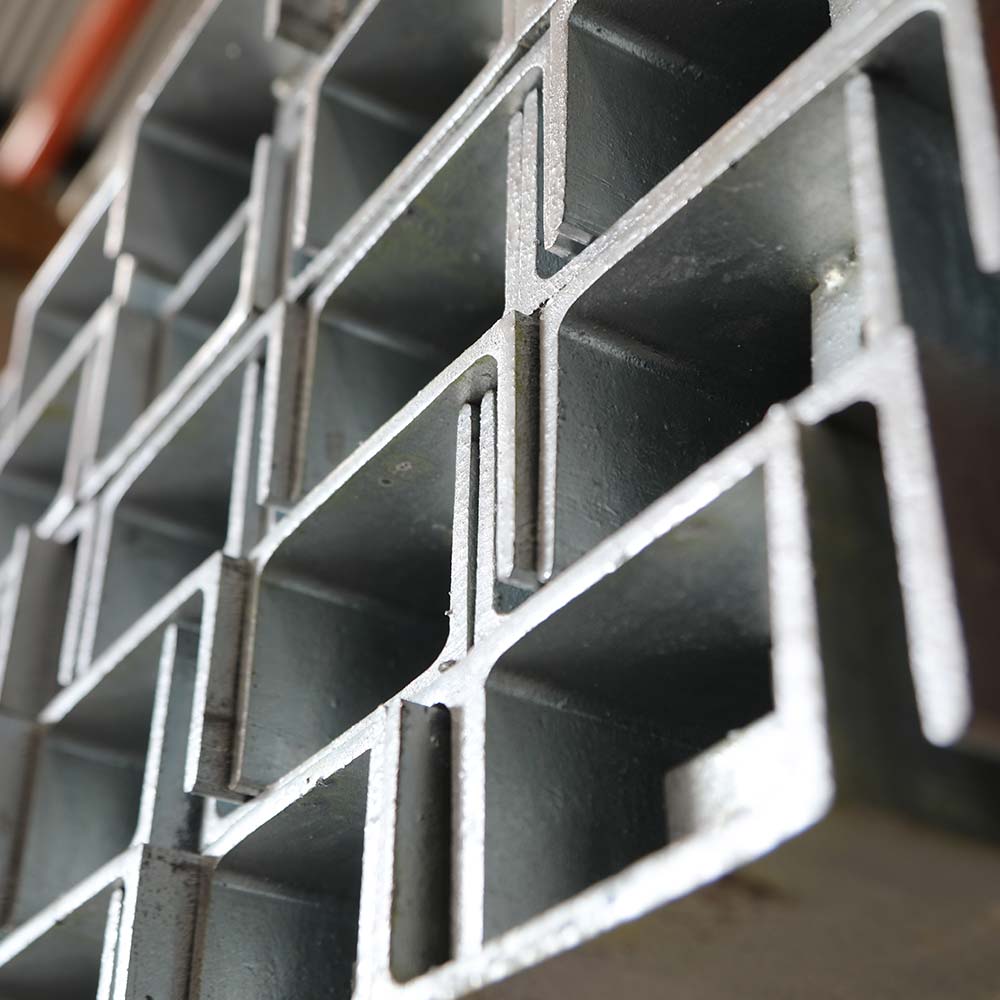
Key Advantages of Q355 Steel Posts
1. Structural Strength
- Higher Yield Strength:
Q355 offers approximately 51% greater yield strength than Q235 (355 MPa vs. 235 MPa), enhancing its ability to resist lateral earth pressures without permanent deformation. - Superior Tensile Strength:
With a tensile strength of 490–630 MPa (compared to Q235’s 370–500 MPa), Q355 is better suited for high-stress conditions like flooding or seismic events. - Improved Resistance to Bending:
Q355 performs better under horizontal soil pressure, making it ideal for retaining walls subject to large bending moments.
2. Material Efficiency
- Reduced Steel Usage:
Higher strength allows for smaller section sizes or wider post spacing, potentially lowering material consumption. - Slimmer Design Profiles:
Ideal for space-constrained sites, enabling thinner wall designs while maintaining structural integrity.
3. Durability and Longevity
- Enhanced Fatigue Resistance:
Better suited for retaining walls affected by cyclic loading, such as water table variations or freeze-thaw cycles. - Superior Impact Performance:
Q355 resists impacts better in cold climates or harsh environments. - Greater Hardness:
Offers improved protection against mechanical damage during installation or from equipment contact.
4. Economic Considerations
- Lower Life-Cycle Costs:
Although Q355 is initially 10–15% more expensive, its longevity and reduced maintenance often lead to lower total ownership costs. - Simplified Foundations:
Higher strength may allow for less extensive foundation systems, offsetting some upfront material costs. - Fewer Replacements:
Increased durability extends intervals between major repairs or replacements.
5. Safety Benefits
- Greater Safety Margins:
Higher strength provides additional protection against unforeseen loads or variable soil conditions. - Extreme Condition Performance:
Performs better in seismic zones, heavy rainfall areas, and locations with significant groundwater pressure.
6. Ideal Use Cases for Q355
- Retaining walls over 3 meters tall
- Structures supporting heavy surcharge loads (e.g., roads, buildings)
- Sites with poor soil conditions
- Waterfront or marine retaining structures
- Seismically active regions
- Areas exposed to impact risks (e.g., vehicles)
- Temporary structures with heavy loads
While Q235 may suffice for moderate applications, Q355 excels where performance, longevity, and safety are critical.
Executive Summary
This section compares Q355 and Q235 structural steel grades under the Chinese GB (Guobiao) standards. The “Q” denotes structural-quality steel, while the numbers reflect minimum yield strength in MPa.
Weldability and Fabrication
- Q235: Excellent weldability; easier to cut, bend, and form
- Q355: Good weldability; may require pre-heating for thicker sections; slightly harder to form due to higher strength
Common Applications
Q355:
- High-rise structures
- Bridges and infrastructure
- Offshore platforms
- Heavy-duty machinery
- Pressure vessels
- Transport equipment
Q235:
- Low-to-mid rise buildings
- Light-to-medium load structures
- Handrails, pipe supports
- Storage tanks
- General fabrication and machine parts
Cost Comparison
Q355 costs 10–15% more than Q235 due to:
- Higher alloy content
- More stringent quality control
- Greater demand in high-performance applications
Conclusion
Both Q355 and Q235 are widely used carbon structural steels, but they serve different purposes:
- Q355 is ideal for critical, high-strength applications requiring long-term durability and performance under stress.
- Q235 remains a cost-effective option for standard, moderate-load applications.
Choosing the appropriate grade depends on project-specific needs such as structural demands, environmental conditions, fabrication complexity, and overall budget.