
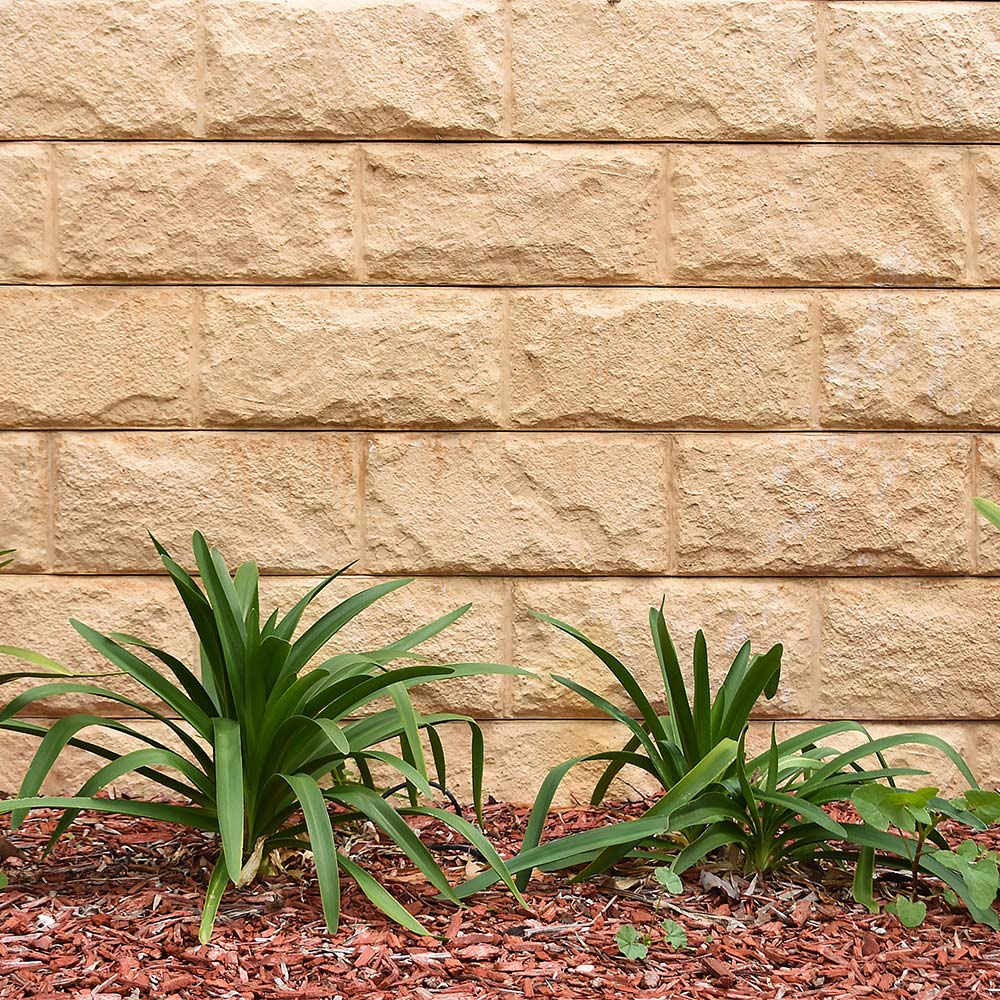
Concrete Sleepers
Cost: Generally mid-range, offering good value for durability and strength.
Environmental Impact: Concrete production has a notable carbon footprint, but its longevity can offset this over time. Concrete can be recycled at the end of its life, reducing environmental impact and preventing it from becoming a waste product.
Ease of Installation: Heavy and generally requires machinery and professional installation, increasing initial costs.
Lifecycle Considerations: Concrete sleepers are highly resistant to thermal expansion, pests, and mould. UV exposure can cause some colour fading over time, but this is minimal compared to other materials. In tropical climates, their resistance to moisture and rot is advantageous. At the same time, their thermal mass can help mitigate temperature fluctuations in arid zones. Overall, the lifespan of a concrete sleeper can be measured in decades, making it the retaining wall of choice in terms of longevity.
Timber
Cost: Can be cost-effective, especially for softer woods, but treated or more durable hardwood options can be more expensive.
Environmental Impact: Renewable resource, but the treatment process for making timber weather-resistant can involve harmful chemicals. Choosing sustainably sourced timber can mitigate environmental concerns.
Ease of Installation: Lightweight and easy to work with, making it suitable for DIY projects. However, its lifespan in harsh climates can only be limited if properly treated and maintained.
Lifecycle Considerations: Susceptible to moisture damage, rot, and pests, particularly in tropical and temperate climates. Treated timber can resist these issues but may require regular maintenance. UV exposure can cause significant colour fading and deterioration over time.
Stone
Cost: High due to materials and a labour-intensive installation process.
Environmental Impact: Low, especially if sourced locally, as it requires minimal processing and is highly durable.
Ease of Installation: Installation is labour-intensive and requires skilled craftsmanship, which can drive up costs.
Lifecycle Considerations: Stone is highly resistant to weathering, pests, and fire, making it suitable for all climates. It does not suffer from thermal expansion or colour fading. However, its porous nature in some varieties can be a drawback in very wet climates unless properly sealed.
Brick
Cost: Mid- to high-range, depending on the type of brick and the design complexity.
Environmental Impact: Similar to concrete, brick production is energy-intensive, but its durability can make it a sustainable choice over the long term.
Ease of Installation: Requires skilled installation, especially for complex patterns or designs. Mortar and proper drainage are crucial to prevent water damage.
Lifecycle Considerations: Brick is durable and resistant to pests and most weather conditions, but can be prone to moisture absorption and frost damage in temperate climates if not properly maintained. UV exposure can cause some fading, but this is generally considered to add character to the material over time.
Metal
Cost: Variable, depending on the type of metal. Galvanised or stainless steel is more expensive but offers greater durability.
Environmental Impact: High energy consumption in production, but recyclable. Coatings used to prevent corrosion can also impact the environment.
Ease of Installation: Relatively easy to install and can be designed for quick assembly with prefabricated systems.
Lifecycle Considerations: Excellent strength and durability. Resistant to pests and most forms of degradation. Corrosion can be a concern in coastal or very humid tropical climates unless properly treated. Thermal expansion is a factor, but it can be managed with appropriate design.
Overall This comparative analysis highlights the importance of considering a range of factors when choosing retaining wall materials. The ideal choice for a project will balance cost, environmental impact, and ease of installation with the specific challenges posed by the local climate, ensuring that the retaining wall remains functional and attractive for years to come.